
Assisted dying debate: Two powerful stories offer opposing views of a desperate dilemma
Welcome to the ITV News digest bringing you the best of our original journalism, insight and analysis from across the UK, and the world.

Is there a gulf between public opinion and parliamentary action on the issue of assisted dying?
Hello, I’m Paul Brand, UK Editor with ITV News, and that is the question being posed this week after Holyrood rejected a bill which would have legalised the practice in Scotland, while a bill for England and Wales comes ever closer to running out of time in the House of Lords.
Exclusive polling for ITV News shows that 65% of people support the assisted dying bill, while 14% oppose it.
On either side of the debate are terminally ill people anxiously watching, worried either for their autonomy or their vulnerability.
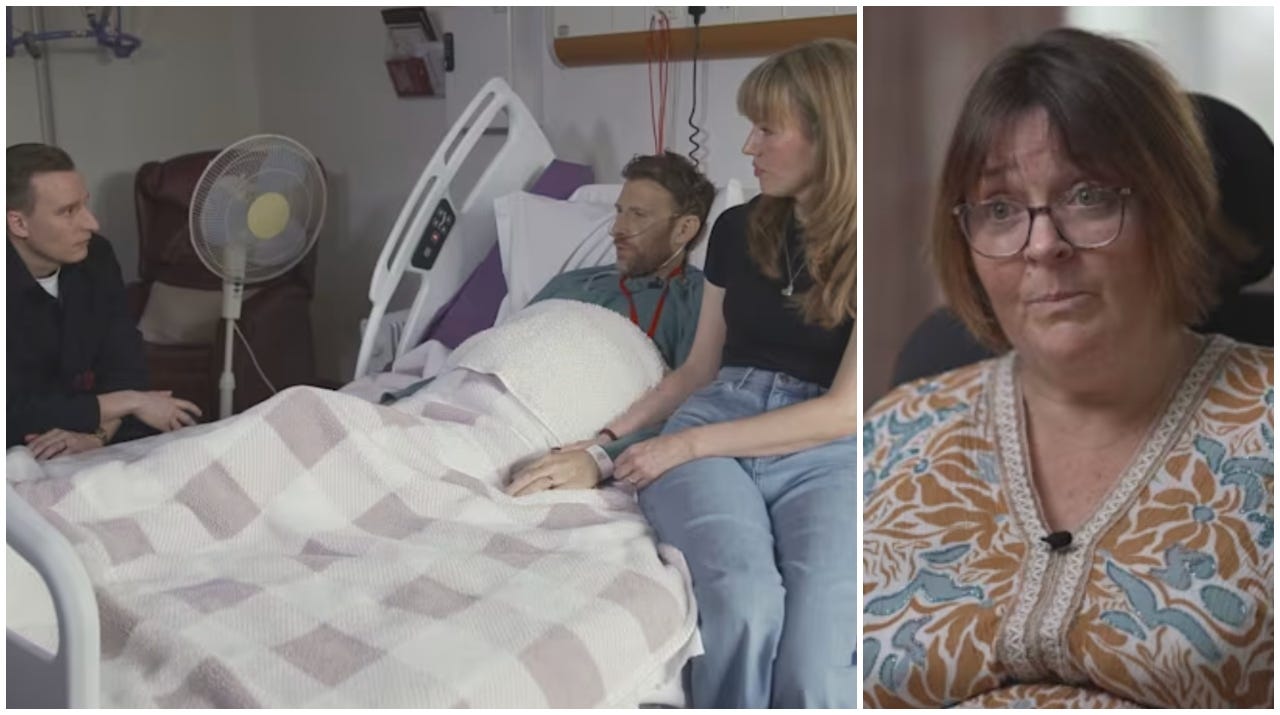
John Wilson was diagnosed with bowel cancer six years ago and told us that having the choice of an assisted death could have reduced his suffering and given him more control over his fate.
Also diagnosed with a terminal illness - motor neurone disease - six years ago, Nicola Waters feels the opposite, worrying that assisted dying will leave disabled people like her being coerced into an early death.
Both speak from the heart, but opponents in the House of Lords also say that this issue requires thinking with their heads.
After tabling more than 1200 amendments, they insist that they are not deliberately running down the clock, but providing much needed scrutiny of what they deem to be a flawed bill.
Both sides have just a few weeks left to debate before the bill’s fate will be sealed.

ITV News’ findings prompt ‘crackdown’ on families being cut off from disabled loved ones
Ministers have promised to strengthen visiting rights and warned they could change the law to ensure better protections for families, following ITV News reporting.
Care Minister Stephen Kinnock told ITV News families will “no longer be cut off from their loved ones” and promised to improve visitation rights and end blanket bans on contact.
It follows an ITV News investigation which found hundreds of families claiming they have been restricted or banned by care companies and councils from seeing loved ones with learning disabilities, after complaining about the quality of care.
‘I couldn’t talk, I couldn’t move, I couldn’t see’
Annabelle Mackay had been out celebrating her 21st birthday at Club Chemistry - the venue thought to be ‘ground zero’ of the Kent meningitis outbreak - in early March.
Five days later, Annabelle became unwell - feeling delirious and severely fatigued, drifting in and out of consciousness. She also developed a fever and a severe headache.
As her symptoms continued to worsen, she was taken by ambulance to a resuscitation unit in Margate Hospital.
“I couldn’t talk, I couldn’t move, I couldn’t see,” Annabelle told ITV News.
Some 29 cases of meningitis B are being investigated, and two young people have died.
Undercover investigation reveals reality of corridor care
Steve Jones, 68, went to his local hospital’s emergency department with severe stomach pains. After being assessed by the triage team, he was placed on a corridor.
And there he stayed. For 44 hours. On his third day in Ysbyty Glan Clwyd hospital in Wales, Steve finally underwent surgery to remove his gallbladder - which had become gangrenous.
“It was like a warzone,” he told reporter Siôn Jenkins. “I thought I was going to die, to be honest. It was frightening.”
Undercover investigation by the S4C current affairs programme Y Byd ar Bedwar filmed dozens of patients receiving care on corridors in the emergency departments at two north Wales hospitals.
War in Iran: From our journalists
Inside Tehran as filmmaker secretly records life during Iran war
Over the first ten days of war in Iran, an Iranian filmmaker has been sending us videos and voice notes documenting her perspective of the war in the capital, Tehran.
This piece by ITV News and Zandland is told in our filmmaker’s voice, but we have altered the sound with AI for her protection. We are calling her Shirin.
Only a chosen few have been given access to the internet, while the rest of the country has little to no connection under increasingly tight control.
Those in Iran face not just the threat of bombs, but also persecution from the regime. The videos were recorded at great risk - if caught, she could face the death penalty.
The physical, psychological and social wounds suffered by children in Lebanon
Sometimes it’s the asides which are the most disturbing, writes International Editor Emma Murphy, from Lebanon.
We interviewed Dr Ghassan Abu Sitta, a combat surgeon who has spent much of the last few years treating children in Gaza and is now in Lebanon treating the children of this war.
We were looking at a scan of an 11-year-old girl’s face.
The white marks on the image were shrapnel in her cheeks, a larger white mark detailed the shrapnel that had torn into her eye socket and destroyed the eye completely.
And then we looked at the image of her mouth.
“I need to go and operate on her after this,” Dr Abu Sitta told me. “Her mouth is like a bag of broken bones.”
Should he stay or should he go?
Should King Charles press ahead with an official state visit to the USA, at a time when President Trump is failing to secure any international support for his Iran war and when he repeatedly lashes out at the UK and our European allies?
It’s a problem that someone is soon going to have to address, says ITV News Royal Editor Chris Ship.
And, as much as many think it’s the King’s problem, it’s not.
It’s actually an issue for Downing Street.
That’s because State Visits, both incoming ones (think USA, France, Germany last year) and external ones (the King most recently visited Italy and The Vatican) are decided by the Foreign Office.
How long can Starmer resist Trump’s barbs?
US president Donald Trump has once more criticised UK PM Keir Starmer, roasting his handling of the Iran war and claiming the special relationship was good "until Keir came along".
Not for the first time, Trump described Starmer as “no Winston Churchill”. While it would seem the majority of the British public back the prime minister’s stance of keeping out of direct involvement in the Iran war, there are worries a capricious president could yet turn up the economic heat on the UK at a later date.
On this week’s episode of Talking Politics, presenter Tom Bradby and Political Editor Robert Peston discuss whether the UK–US partnership can survive - and how much Trump’s broadsides really matter.
Starmer says he doesn’t want to get drawn into the “wider” war, but how long can that position hold?
Is it time to move on from trying to shore up sea defences?
After a winter of seismic change, with metres of sand and cliffs and dozens of homes lost in just a few weeks, many coastal communities have been left in a state of shock.
Since December, 26 properties have been demolished at Hemsby in Norfolk, 11 have been knocked down at Thorpeness in Suffolk, and more are set to go any day now in Happisburgh.
Once again, campaigners on the front line have asked why money is not being put into defence schemes to reduce the impact of the waves, prepare for rising sea levels, and prevent the never-ending movement of sand.
The issue is explored in depth in a new documentary from ITV News Anglia, Against the Tide, which examines the impact coastal erosion is having on communities - and what, if anything, can be done about it.
The stark reality of crippling student loans laid bare
When Faith Kanteh graduated in 2023, her debt was already more than £54,000. It’s now grown beyond £67,000.
She said: “[I’m] shocked. Shocked as anyone would feel. I think I saw it and was like, there’s no way that I, at 17, 18 years old, signed up for that kind of debt.”
And Faith’s is by no means an outlier of a case. Research by Organise, commissioned for ITV News, shows:
73% of people who owe money under the scheme have seen the balance grow
23% owe more than £20,000 above their original loan amount
10% owe at least £40,000 more than they borrowed
Critics of the loans claim that, by freezing the repayment threshold, government is acting like a loan shark, changing terms and conditions long after people signed up.
Meanwhile, the government says it’s considering options for reform.
ITV News is one of Britain’s most trusted providers of news. You can access our expert analysis, correspondents and content on platforms beyond ITV1.
Our streaming platform ITVX has all our regional and national news programmes, plus original content and a regularly updated bulletin
Visit our website or download the news app on Apple or Android
We’re on social platforms: TikTok; Instagram; Facebook; X (Twitter); LinkedIn and YouTube
And we’ve a range of podcasts including Talking Politics and What You Need To Know
You can also follow the ITV News channel on WhatsApp for regular updates
All our journalists work to the Ofcom code
‘He made me forget what love should feel like’
Daisy Martin was just 20 at the time she was with abusive partner Callum Coady.
His controlling and coercive behaviour stripped her of her self-worth, her confidence and wrecked her hopes of other relationships.
When he was arrested - following an altercation in an airport bar - police found 35,000 messages from Coady to Daisy on his phone.
Daisy - who waived her right to anonymity - told ITV News Granada: "I used to be open and secure, but that part of me feels damaged. This experience has deeply affected my trust and identity.”
Coady, 27, was this week sentenced to 16 weeks in prison, suspended for 12 months, after pleading guilty to coercive control. He was also handed a five-year restraining order.
Reporting history: What happens when the Oscars stars steal the limelight
Our Arts Editor Nina Nannar has covered countless Oscars ceremonies - and has been on the frontline of its most shocking moments and biggest controversies.
She sat down with Tom Bradby to reflect on the various cultural earthquakes that have rippled out from Hollywood - and how they have played out behind-the-scenes at the Oscars.
She relives the ultimate 'where were you when' moment - the Will Smith-Chris Rock slap incident - and how the world's media reacted. And she reveals what Will Smith was really like in-person when she spent time with him…
On the frontline with police dismantling crime networks in county lines crackdown
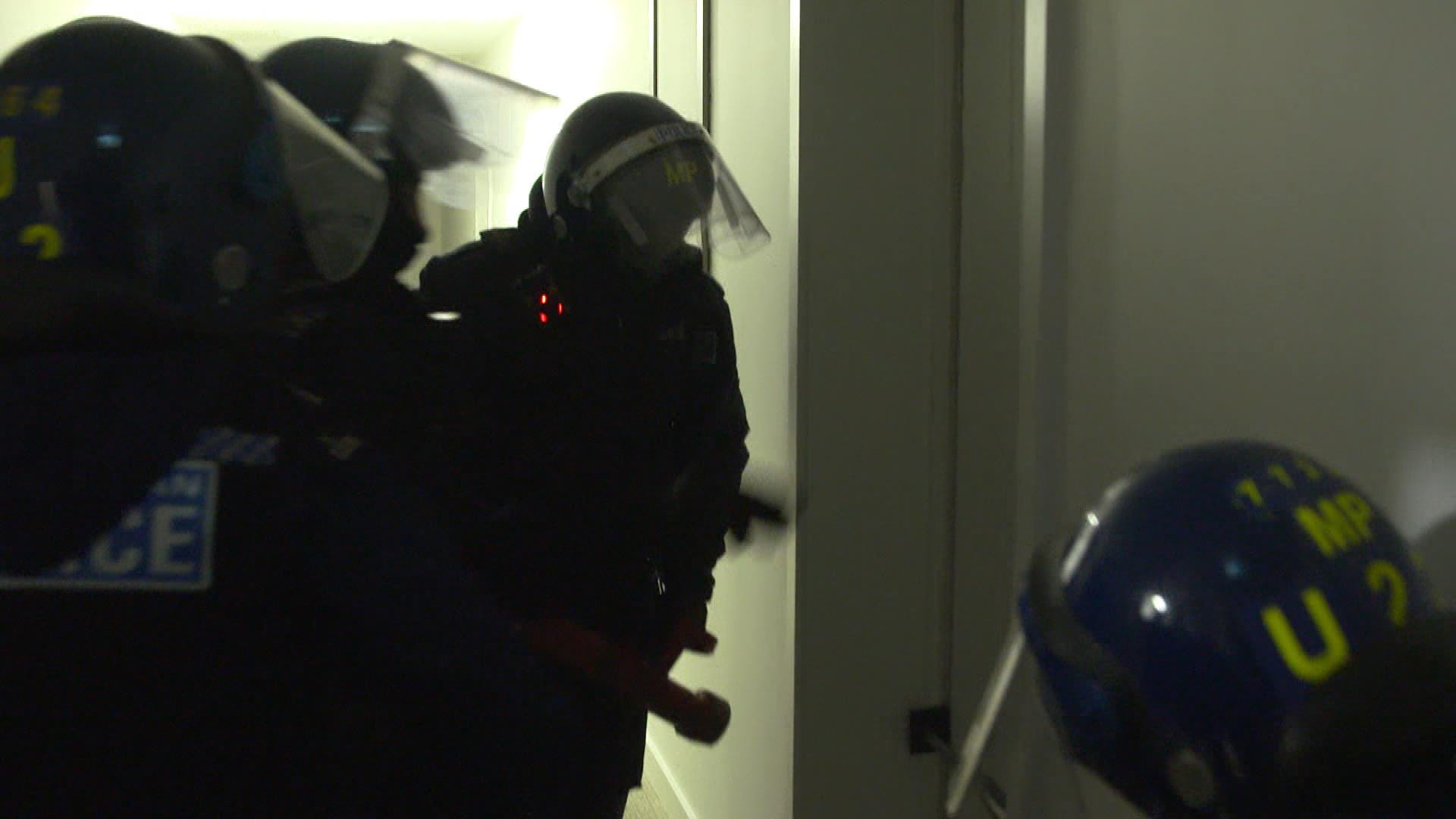
ITV News London had exclusive access as the Metropolitan Police executed three simultaneous warrants in London, which police said would have a “significant impact” on the community.
“Drug activity doesn’t work in isolation,” said Detective Chief Inspector Sarb Kaur.
“It drives antisocial behaviour, homicide, violence and serious harm that is the impact on other crime types.”
Officers arrested more than 400 people, recovered £195,000, and charged 178 people across the capital.
Watch the full report on ITVX.
What’s coming up…
Monday March 23: Sir Keir Starmer at Liaison Committee. The session will last for 90 minutes. The Liaison Committee is made up of the chairs of the Commons select committees
Tuesday March 24: Bafta television awards nominations announced
Wednesday March 25: Dame Sarah Mullally to be installed as first female Archbishop of Canterbury, at Canterbury Cathedral
Thursday March 26: The Mobo Awards, staged in Manchester. Nominees for the Music of Black Origin Awards include Little Simz, Olivia Dean, kwn and Jim Legxacy
And finally… Watch these cows have a field day in the sun…
There’s nothing like a bit of spring sunshine to put a spring in your step.
And for farmer John Percival’s herd of cows, being released from winter confinement into the lush green fields saw a surge of youthful frolicking.
“There’s something special about the moment you open the door,” he said. “It’s one of the best parts of the job, really…”